WhatsApp: +86-185-5601-8866
Heating Equipment
News
2026-01-19
Understanding Hot Spots in Cartridge Heaters
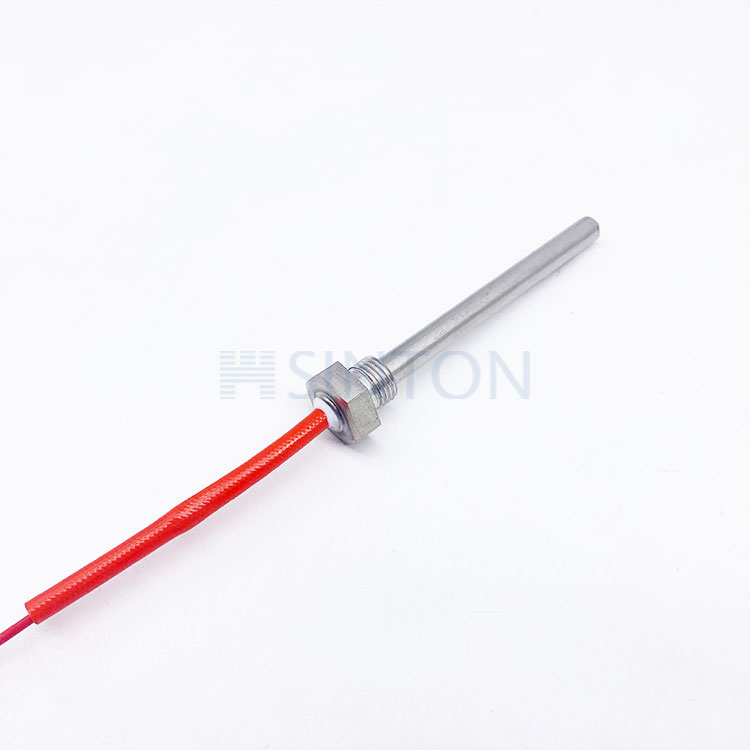
High-watt-density cartridge heaters are engineered to deliver significant heat output over a relatively small cross-sectional area, enabling rapid thermal response and efficient heating in industrial applications. However, concentrating power in a compact form factor inherently increases the risk of localized hot spots, where certain regions of the heater become hotter than adjacent areas. These hot spots can accelerate insulation breakdown, lead to uneven heat distribution on the workpiece, or even cause premature burnout of the heater coil. In processes such as injection molding, die heating, or extrusion, inconsistent temperatures can result in material defects, dimensional inaccuracies, and reduced product quality. Therefore, controlling and mitigating hot spots is essential to ensure both heater longevity and reliable process performance.
Magnesium Oxide (MgO) Insulation for Uniform Heat Transfer
A core method for managing hot spots in cartridge heaters is the use of densely packed magnesium oxide (MgO) insulation around the resistive heating element. MgO provides excellent thermal conductivity while remaining electrically insulating, allowing heat to flow evenly from the coil to the outer metal sheath. In high-watt-density designs, careful compaction of MgO eliminates voids or gaps that could act as thermal insulators and produce localized overheating. The uniformity and density of the MgO packing ensure that the internal heat is transferred efficiently along the entire length of the heater, minimizing temperature differentials. This approach is particularly crucial in high-power applications, where even minor inconsistencies in insulation could result in accelerated degradation or uneven heating of the workpiece.
Precision Coil Winding and Element Design
Another critical factor in preventing hot spots is the precise winding of the internal resistive coil. In high-watt-density cartridge heaters, the heating wire is often arranged in tight, uniform coils or helical patterns, with carefully calculated spacing to distribute electrical current evenly along the heater’s length. Some designs incorporate variable pitch coils to adjust energy density in specific regions, such as increasing coil density at the ends to compensate for thermal losses. By controlling wire diameter, resistance, and spacing, manufacturers can achieve a consistent temperature profile and prevent localized overheating. This meticulous coil design ensures that the heater delivers uniform energy output even under continuous, high-power operation.
Sheath Material and Thermal Conductivity
The metal sheath surrounding the cartridge heater, typically stainless steel or Incoloy, plays a vital role in mitigating hot spots. These materials have high thermal conductivity, allowing heat generated by the coil to spread quickly and evenly along the heater surface. Uniform sheath thickness and high material quality further contribute to smooth heat distribution, reducing the risk of localized temperature spikes. Additionally, the sheath acts as a thermal buffer, absorbing minor variations in coil temperature and transferring energy consistently to the surrounding workpiece. The combination of a thermally conductive sheath and well-designed internal coil ensures that even in high-watt-density configurations, the heat remains evenly distributed, avoiding damage to both the heater and the part being heated.
Thermal Contact and Proper Installation Practices
Even the most advanced cartridge heater can develop hot spots if installation practices are not properly followed. A snug fit between the heater and the bore of the mold, die, or machine component is essential to ensure efficient thermal conduction. Air gaps or loose insertion can act as insulators, causing localized overheating and uneven temperature distribution. In some applications, thermal compounds or pastes are applied to fill microscopic gaps, enhancing heat transfer. Maintaining proper insertion depth, alignment, and straightness ensures that heat is transferred evenly along the contact surface. Consistent installation practices are critical in high-watt-density designs, where the margin for thermal deviation is small.
Electrical Control and Zoning
In demanding industrial applications, advanced temperature control strategies are employed to further prevent hot spots. Thermocouples or RTDs embedded near critical regions of the cartridge heater provide real-time temperature feedback to PID or advanced electronic controllers. This allows for precise regulation of current supplied to the heater, maintaining uniform temperatures along its length. Multi-zone control is especially useful in longer heaters or high-watt-density designs, where slight variations in coil resistance or thermal losses could otherwise produce uneven heating. Through continuous monitoring and adjustment, these systems enhance both heater reliability and process consistency, ensuring high-quality thermal performance in critical manufacturing operations.
Looking For Business Opportunity?
Request for a call today
WhatsApp: +86-185-5601-8866
Tel: +86-185-5601-8866
E-mail: [email protected]
Address: Sinton Building, No. 886 Yandu Road, Yandu District, Yancheng City, Jiangsu Province
Friendly Link: www.cn-lvdao.com www.sealing-china.com
Products
Message