WhatsApp: +86-185-5601-8866
Heating Equipment
News
2026-05-06
The single-ended cartridge heater has both lead wires exiting from one end, while a double-ended cartridge heater has one lead wire exiting from each end. This structural distinction directly affects installation flexibility, electrical wiring, heat distribution, and suitability for specific industrial applications. Choosing the wrong type can lead to installation difficulties, uneven heating, or premature heater failure.
The most visible difference between these two cartridge heater types lies in how the electrical leads are arranged.
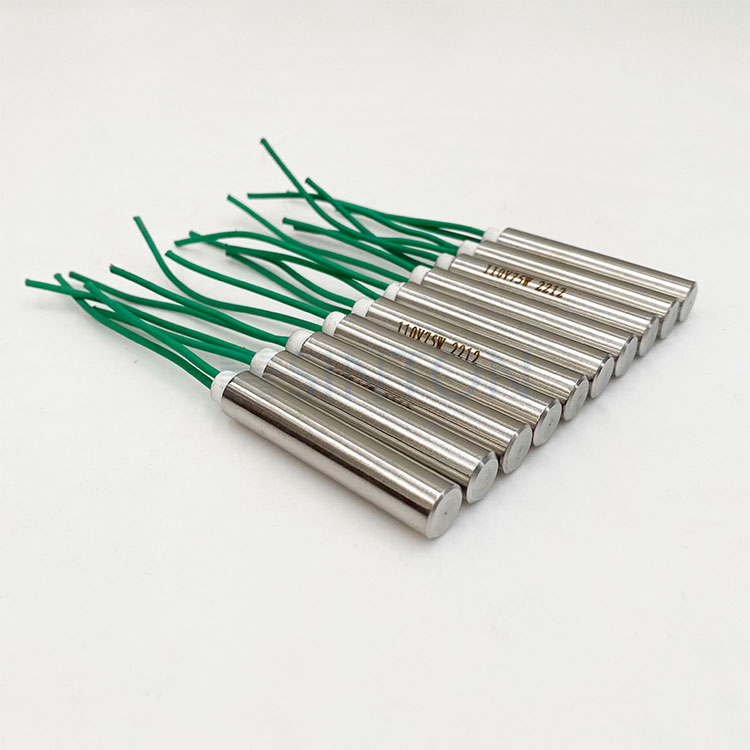
In a single-ended cartridge heater, both positive and negative lead wires exit from the same end of the heater body. This is the most common configuration found in industrial heating applications. The opposite end is sealed and closed, which means the heater is inserted from one side of the bore hole, with the leads remaining accessible for easy wiring.
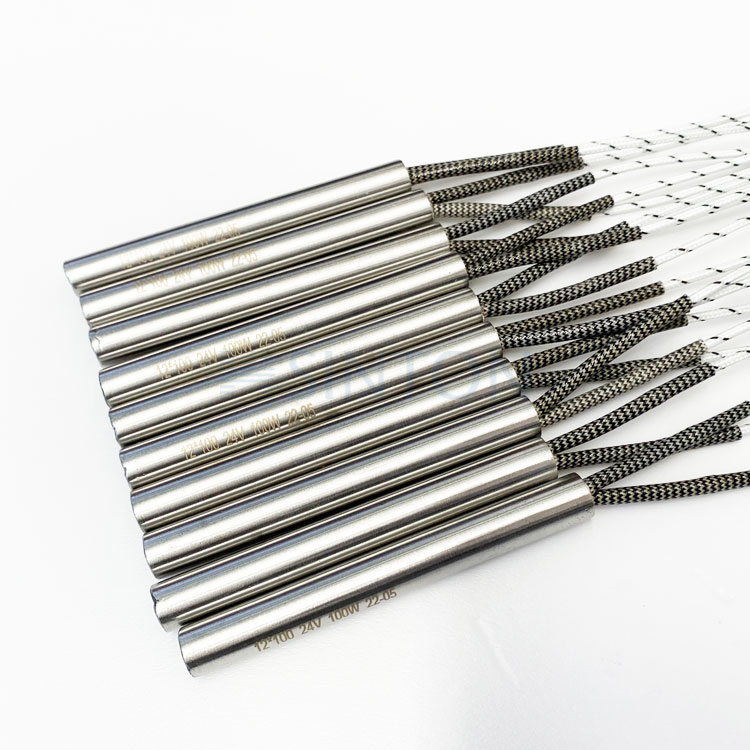
A double-ended cartridge heater has one lead wire coming out of each end. This configuration is used when space constraints or installation geometry make it impossible to route both wires from a single side. It is also sometimes called a "through-hole" heater because the design implies accessibility from both ends of the bore.
| Feature | Single-Ended | Double-Ended |
|---|---|---|
| Lead Wire Exit | Both from one end | One from each end |
| Installation Complexity | Low | Moderate to High |
| Wiring Access Requirement | One side only | Both sides |
| Heat Distribution | Concentrated toward lead end | More uniform along length |
| Common Applications | Molds, dies, platens | Confined spaces, symmetrical fixtures |
| Replacement Ease | Easy | More complex |
| Availability | Widely available | Less common, often custom |
Installation practicality is one of the most critical factors when choosing between the two types.
Single-ended cartridge heaters are significantly easier to install and replace. Since both leads exit from the same end, the technician only needs access to one side of the equipment. This is ideal for production environments where downtime must be minimized. In a typical injection mold setup, for example, a single-ended heater can be slid into its bore and wired within minutes.
Double-ended cartridge heaters require access to both ends of the bore. This can become a serious limitation in enclosed machinery or fixtures where one side is blocked by structure or adjacent components. However, in certain symmetrical or through-mounted assemblies, the double-ended design is the only viable option when routing cables through the component is structurally required.
Heat distribution is a technically important distinction that is often overlooked by first-time buyers.
In a single-ended cartridge heater, the resistance coil is wound internally and both electrical connections terminate at one end. This means the cold (unheated) section near the lead exit can be slightly longer, and heat density may be less uniform over the full length. Manufacturers typically specify an "unheated length" of 0.5 to 1.5 inches at the lead end.
Double-ended cartridge heaters, by design, allow the resistance wire to be distributed more symmetrically from end to end. This can result in more even heat output along the entire active length, which is beneficial in applications where temperature uniformity across the heated zone is critical — such as in laboratory instruments, semiconductor equipment, or precision temperature-controlled fixtures.
Understanding which industries and use cases favor each type helps narrow down the right choice quickly.
Both cartridge heater types are available across a wide range of watt densities, but their performance characteristics under high load differ slightly.
Standard cartridge heaters — both single and double-ended — are typically available in watt densities ranging from 40 W/in² to over 150 W/in² for high-performance swaged versions. At high watt densities, the fit tolerance between the heater and bore becomes especially important. A loose fit — even a gap of 0.002 to 0.005 inches — can dramatically reduce heat transfer efficiency and shorten heater life.
For single-ended heaters, thermal management at the lead end requires careful design attention to avoid hotspots near the sealed tip. Double-ended designs may offer a slight advantage in distributing thermal stress more evenly, particularly in longer heater bodies exceeding 12 inches in active length.
From a procurement standpoint, single-ended cartridge heaters are the clear winner in terms of cost and availability.
For high-volume production environments where heater replacement is routine, the availability and lower replacement cost of single-ended cartridge heaters can represent a significant operational advantage over the course of a year.
Use the following decision criteria to select the appropriate cartridge heater configuration:
Single-ended cartridge heaters are the practical default for the vast majority of industrial applications, while double-ended cartridge heaters serve as a specialized solution for unique mechanical or thermal requirements. Always consult your heater supplier with the specific bore dimensions, required watt density, operating temperature, and equipment layout to confirm the optimal choice before ordering.
Looking For Business Opportunity?
Request for a call today
WhatsApp: +86-185-5601-8866
Tel: +86-185-5601-8866
E-mail: [email protected]
Address: Sinton Building, No. 886 Yandu Road, Yandu District, Yancheng City, Jiangsu Province
Friendly Link: www.cn-lvdao.com www.sealing-china.com
Products
Message