WhatsApp: +86-185-5601-8866
Heating Equipment
News
2025-12-29
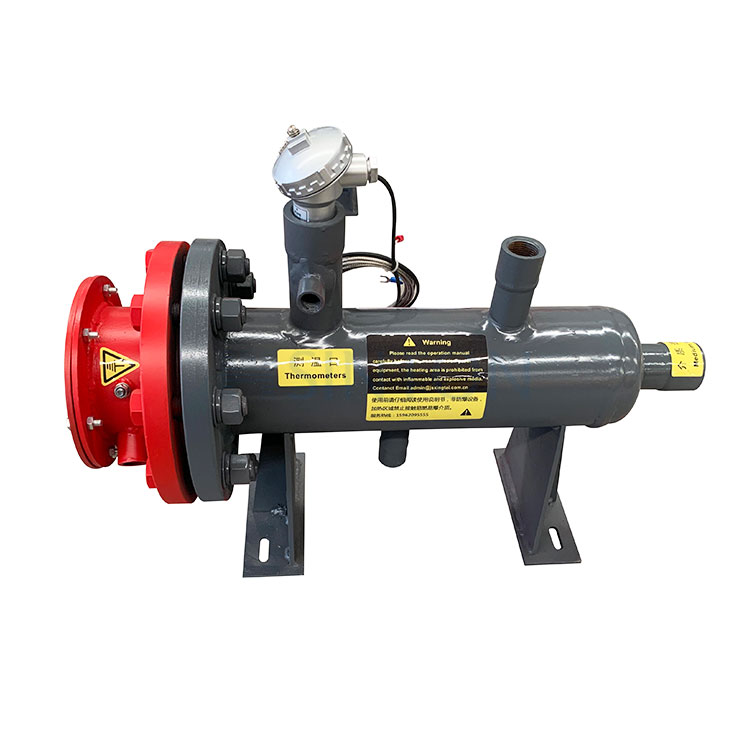
Modern pipeline heaters rely on advanced temperature monitoring systems to maintain thermal stability under variable flow and pressure conditions. Multiple high-precision sensors, such as thermocouples or RTDs, are installed at key locations along the pipeline to continuously monitor the fluid’s temperature. These sensors feed real-time data to the heater’s control system, enabling immediate adjustments to power output.
When there is a sudden increase in flow rate, the fluid spends less time in the heated section, potentially lowering the outlet temperature. The control system detects this instantaneous change and increases heating input to compensate, ensuring the fluid reaches the desired temperature. Conversely, when flow decreases, fluid dwell time increases, and the system automatically reduces heat output to prevent overheating. This dynamic, closed-loop feedback mechanism ensures the heater maintains consistent thermal output across transient operating conditions, preventing hot or cold spots that could compromise process integrity, product quality, or safety.
To handle rapid variations in flow and pressure, pipeline heaters utilize sophisticated control algorithms, such as PID (Proportional-Integral-Derivative) controllers or model predictive control (MPC). These systems continuously calculate the required heat input based on the rate of temperature change, flow rate, and pressure fluctuations.
PID algorithms provide rapid response by adjusting heating power proportionally to the temperature deviation, correcting cumulative errors over time and anticipating future temperature changes. MPC systems can predict the thermal effect of flow or pressure variations before they fully impact the fluid, allowing preemptive adjustments. This adaptive control ensures that even abrupt process disturbances — such as sudden pump startup, valve closure, or unexpected pipeline demand — do not compromise the uniformity of heat delivery or downstream process requirements.
A key engineering feature that enables pipeline heaters to withstand transient flow changes is the high thermal inertia of the heating system. By using heating elements with high mass and thermal conductivity, the system can absorb short-term fluctuations in fluid temperature without significant deviation.
Extended heat transfer surfaces, such as coiled resistive elements, heating jackets, or finned designs, act as thermal buffers, distributing energy evenly along the pipeline. These buffers ensure that sudden inflows of cold fluid or temporary low-flow conditions do not immediately result in localized temperature drops or spikes. This characteristic is particularly valuable in pipelines carrying high-viscosity fluids, chemicals, or sensitive products where temperature uniformity is critical.
Many advanced pipeline heaters are designed with multiple independently controlled heating zones along the pipeline. Each zone can respond to local temperature deviations caused by variable flow rates or pressure changes.
For example, if a pressure surge causes localized faster flow in one section of the pipe, the corresponding heating zone can increase power output to maintain outlet temperature, while other zones maintain their nominal settings. This multi-zone approach ensures that the entire pipeline maintains consistent temperature profiles, avoiding hot or cold pockets that could affect chemical reactions, fluid viscosity, or product quality. It also provides redundancy, as each zone can independently compensate for localized thermal anomalies.
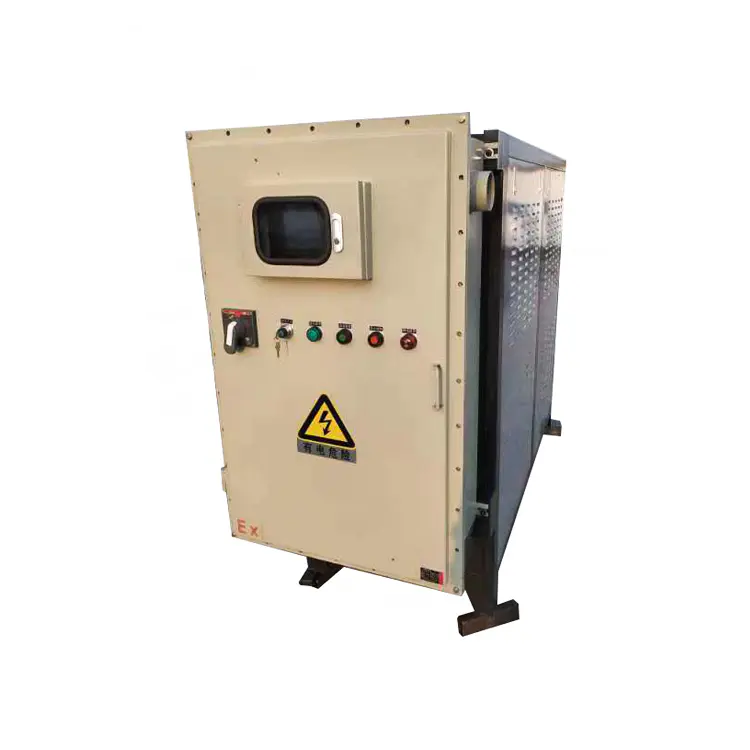
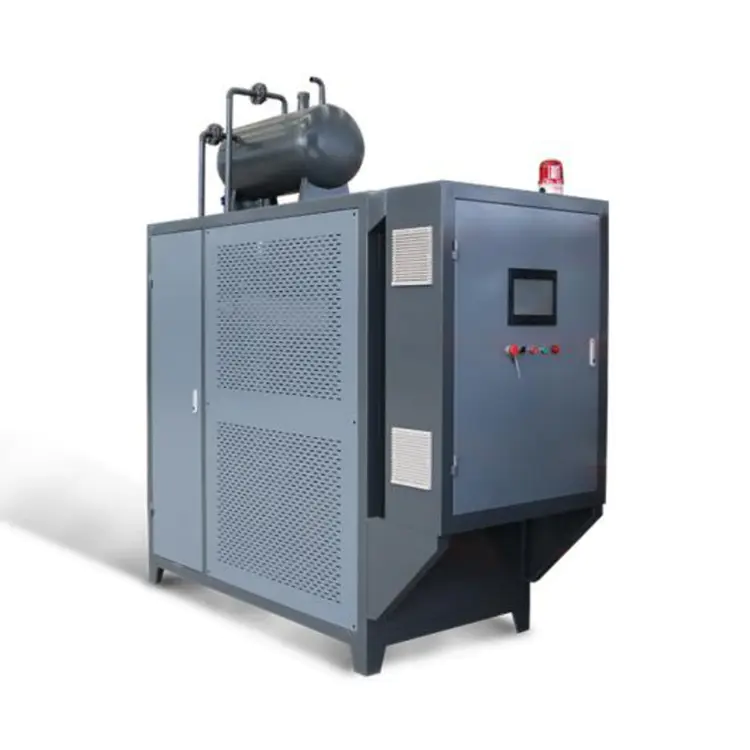
| Type | Internal Dimensions | Grouping | Connection Diameter |
| mm | mm | ||
| XTGD-QT-10 | DN100*700 | 1 | DN32 |
| XTGD-QT-20 | DN150*800 | 1 | DN50 |
| XTGD-QT-30 | DN200*1000 | 1 | DN80 |
| XTGD-QT-40 | DN200*1000 | 1 | DN90 |
| XTGD-QT-00 | DN250*1400 | 2 | DN100 |
| XTGD-QT-80 | DN250*1400 | 2 | DN100 |
| XTCD-QT-100 | DN250*1400 | 2 | DN100 |
| XTCD-QT-120 | DN300*1600 | 3 | DN125 |
| XTCD-QT-150 | DN300*1600 | 3 | DN125 |
| XTCD-QT-180 | DN350*1800 | 4 | DN150 |
| XTCD-QT-240 | DN350*1800 | 5 | DN150 |
| XTCD-QT-300 | DN400*2000 | 6 | DN200 |
| XTCD-QT-360 | 2-DN 350*1800 | 8 | DN200 |
| XTCD-QT-420 | 2-DN 350*1800 | 10 | DN200 |
| XTOD-QT-480 | 2-DN 350*1800 | 10 | DN200 |
| XTCD-QT-600 | 2-DN 400*2000 | 12 | DN200 |
| XTOD-QT-800 | 4-DN 350*1800 | 20 | DN200 |
| XTGD-QT-1000 | 4-DN 400*2000 | 20 | DN200 |
Sudden pressure changes in pipelines can alter fluid velocity and introduce mechanical stresses to the heating system. High-quality pipeline heaters are engineered with reinforced mounting brackets, flexible couplings, and durable insulation, ensuring that heating elements maintain consistent thermal contact with the pipe surface, even under variable pressure conditions.
This mechanical stability prevents separation, vibration damage, or thermal hotspots caused by uneven contact. Flexible or expansion-capable mounting systems also accommodate minor pipeline movement due to pressure spikes or thermal expansion, preventing mechanical strain on the heater or pipeline while maintaining optimal heat transfer efficiency.
Pipeline heaters are often integrated into a broader industrial process control system, which includes flow and pressure sensors. By monitoring these parameters in real-time, the heater can anticipate disturbances and adjust preemptively rather than reacting after a temperature deviation occurs.
For instance, if the system detects a sudden drop in flow due to a valve closure upstream, the heater can automatically reduce power output to avoid overheating. Similarly, a rapid increase in flow triggers an immediate boost in heating input to maintain target outlet temperatures. This predictive control strategy enhances process stability, reduces energy waste, and prevents thermal stress on both the fluid and the pipeline infrastructure.
Looking For Business Opportunity?
Request for a call today
WhatsApp: +86-185-5601-8866
Tel: +86-185-5601-8866
E-mail: [email protected]
Address: Sinton Building, No. 886 Yandu Road, Yandu District, Yancheng City, Jiangsu Province
Friendly Link: www.cn-lvdao.com www.sealing-china.com
Products
Message