WhatsApp: +86-185-5601-8866
Heating Equipment
News
2026-02-24
Zoned heating and multiple heating elements: To achieve uniform temperature across extended or multi-branch pipelines, an Industrial Pipeline Heater often employs a zoned heating strategy. Rather than relying on a single heating element for the entire length, multiple discrete heater sections are installed along the main pipeline and its branches. Each zone is equipped with dedicated heating elements that can be independently controlled, allowing for targeted heat input where it is most needed. This is particularly critical in areas subject to higher thermal losses, such as pipeline bends, exposed sections, or branch intersections. By customizing heat output in each zone based on local thermal requirements, the system prevents the formation of cold spots, ensures uniform thermal profiles, and maintains the desired process temperature consistently throughout the network.
Advanced temperature sensing and feedback control: Maintaining precise temperature uniformity requires continuous monitoring and dynamic adjustment. High-precision sensors such as thermocouples, RTDs (Resistance Temperature Detectors), or infrared temperature probes are strategically placed along the main line and at key branch points. These sensors provide real-time data to the heater’s control system. By employing advanced PID (Proportional-Integral-Derivative) controllers or PLC (Programmable Logic Controller) logic, the system can dynamically modulate the power delivered to each heating zone in response to thermal fluctuations caused by ambient temperature changes, fluid flow variations, or heat loss discrepancies. This closed-loop feedback ensures that every section of the pipeline is maintained within tight temperature tolerances, enhancing product consistency and process reliability.
Uniform heat distribution through heater design: The design and placement of the heating elements themselves are engineered to maximize uniformity. Flexible heating tapes, jacketed heating coils, or pipe clamp heaters are configured to provide even thermal contact along the pipeline’s surface. For multi-branch systems, smaller branch-line heaters or looped circuits are often installed to match the thermal profile of the main trunk, ensuring that all branches receive equivalent heat input. This prevents temperature gradients between different sections of the network, which could compromise fluid properties, chemical reactions, or downstream processes. The physical integration of the heating elements with the pipe ensures efficient thermal transfer and minimizes localized overheating or underheating.
Insulation and heat retention strategies: Temperature uniformity is also dependent on minimizing environmental heat loss. High-quality thermal insulation is applied around both main lines and branch pipelines to reduce energy dissipation and maintain stable operating temperatures. Insulation materials with low thermal conductivity and high durability help preserve the heat supplied by the heater, reducing the need for excessive energy input and preventing temperature gradients. Proper insulation is particularly important for pipelines exposed to outdoor conditions, cold environments, or sections with variable ambient temperatures, as it allows each heating zone to maintain consistent output without compensatory overloading.
Flow and process considerations: The characteristics of the fluid or gas moving through the pipeline also influence temperature uniformity. Flow rate, viscosity, density, and heat capacity determine how effectively heat is distributed along the line. An Industrial Pipeline Heater is often designed in coordination with the process flow to optimize thermal transfer, using controlled flow rates or recirculation loops to ensure the heat is evenly distributed. For multi-branch systems, bypass lines, mixing manifolds, or flow regulators may be employed to equalize temperature across all outlets. This integration of flow management with heating design prevents hot or cold pockets and ensures consistent material properties throughout the pipeline.
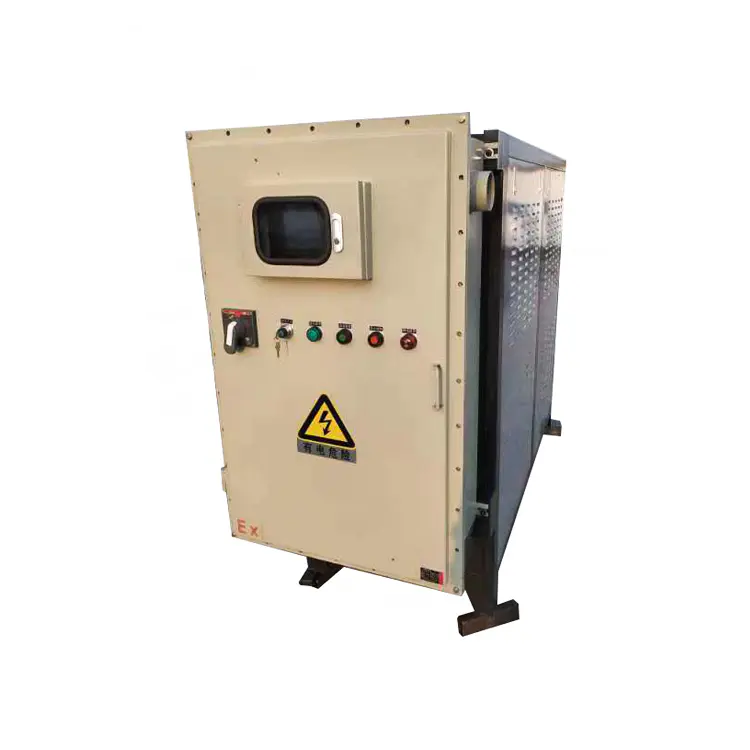
Automation and monitoring: Advanced industrial heaters integrate with automation and process control systems such as SCADA (Supervisory Control and Data Acquisition) or distributed control systems (DCS). These systems provide centralized monitoring, historical data logging, and real-time control of multiple heating zones and sensors. Automated feedback allows the heater to make rapid adjustments in response to changes in ambient temperature, flow rate, or thermal losses, ensuring that uniform temperature is maintained without manual intervention. This capability is essential for large-scale, complex pipelines where maintaining tight thermal tolerances is critical for operational efficiency, energy optimization, and product quality consistency.
Looking For Business Opportunity?
Request for a call today
WhatsApp: +86-185-5601-8866
Tel: +86-185-5601-8866
E-mail: [email protected]
Address: Sinton Building, No. 886 Yandu Road, Yandu District, Yancheng City, Jiangsu Province
Friendly Link: www.cn-lvdao.com www.sealing-china.com
Products
Message