WhatsApp: +86-185-5601-8866
Heating Equipment
News
2026-04-15
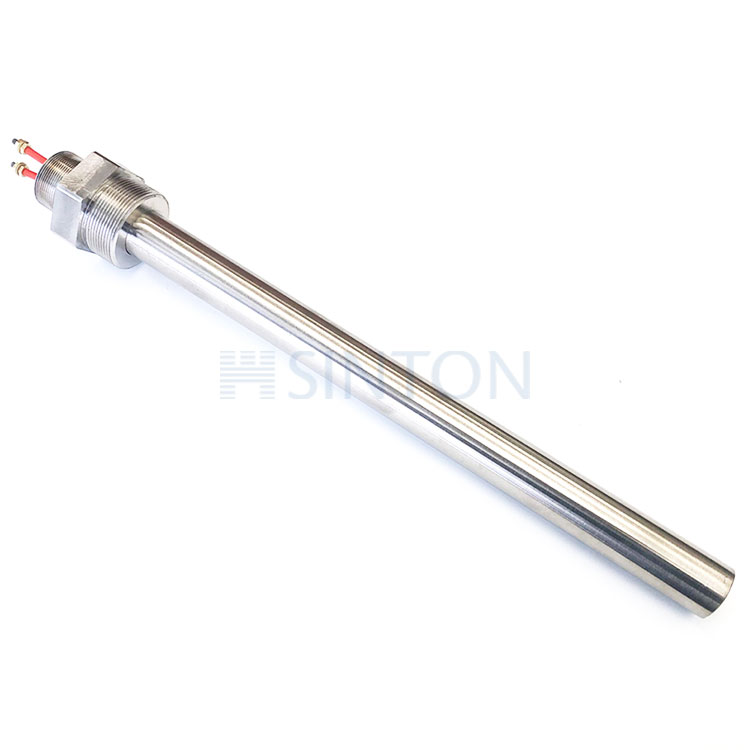
The pipeline heater manages condensate and moisture buildup primarily through a combination of IP-rated or NEMA-rated sealed enclosures, integrated drainage or breather vents, corrosion-resistant materials, and intelligent control systems that monitor insulation resistance. In outdoor and subsea applications, these design features work together to prevent water ingress, maintain dielectric integrity, and ensure continuous heating performance even under prolonged exposure to humidity, rain, or full submersion.
Moisture infiltration inside a pipeline heater enclosure is one of the leading causes of premature failure in field installations. When water or condensate contacts live heating elements, terminal blocks, or control circuitry, the results can range from insulation resistance (IR) degradation to ground faults, arc flash events, and complete burnout of the heating element. In subsea pipeline applications, even a small ingress of seawater — with a conductivity up to 50,000 µS/cm — can short-circuit a heating system almost instantaneously.
Condensate forms not only from external water exposure but also from thermal cycling. As a pipeline heater powers on and off, the enclosure interior repeatedly heats and cools, causing atmospheric moisture to condense on cool metal surfaces. Over months of operation, this internal condensation accumulates and can be just as damaging as direct water ingress.
The first line of defense against moisture in any pipeline heater installation is the enclosure's ingress protection (IP) rating, defined under IEC 60529. For outdoor above-ground pipeline heaters, a minimum of IP65 (dust-tight and protected against water jets) is typically required. For submerged or splash-zone applications, IP67 or IP68 ratings are specified, with IP68 certifying continuous submersion at defined depths and durations — commonly 1 meter for 30 minutes or greater.
In North America, the equivalent NEMA ratings are also widely referenced. NEMA 4X enclosures offer corrosion-resistant, watertight protection comparable to IP66, making them a standard choice for offshore and coastal pipeline heater junction boxes.
| IP Rating | NEMA Equivalent | Protection Level | Typical Application |
|---|---|---|---|
| IP65 | NEMA 4 | Water jets from any direction | Outdoor above-ground pipelines |
| IP66 | NEMA 4X | Powerful water jets, corrosion resistant | Offshore platforms, coastal environments |
| IP67 | NEMA 6 | Temporary submersion up to 1m/30min | Tidal zones, river crossings |
| IP68 | NEMA 6P | Continuous submersion at rated depth | Subsea pipeline heater systems |
Even in well-sealed enclosures, condensate management requires active drainage solutions. Many pipeline heater junction boxes and termination enclosures include low-point drain plugs or weep holes that allow accumulated liquid to exit without creating a pathway for external water to enter. These are typically positioned at the lowest point of the enclosure geometry and sized between 3mm and 6mm in diameter.
Pressure-equalizing breather vents are another widely used solution. These membrane-based devices — often made from expanded PTFE (ePTFE) — allow air and water vapor to pass out of the enclosure during heating cycles while preventing liquid water from entering. Brands such as Gore and Trelleborg supply breather vent membranes that are rated for differential pressures up to 100 kPa, suitable for deep-water pipeline heater applications.
The materials used in pipeline heater construction directly determine its long-term resistance to moisture-related degradation. In outdoor and subsea environments, the following material choices are standard:
It is worth noting that MgO insulation resistance drops significantly when moisture is present. A dry MI pipeline heater cable typically measures greater than 1,000 MΩ at 500V DC. After moisture absorption, this value can fall below 1 MΩ — a level that most ground fault protection systems will trip on, shutting down the heater circuit.
Modern pipeline heater control systems integrate continuous insulation resistance (IR) monitoring as a diagnostic tool for detecting moisture ingress before it causes a fault. IR monitoring applies a low DC voltage across the heating element and measures leakage current to calculate resistance. A gradual decline in IR value over days or weeks is a reliable early indicator of moisture penetration into the heater circuit.
Typical alarm and trip thresholds used in pipeline heater control panels are:
Some advanced pipeline heater management systems, such as those from Raychem (nVent) or Thermon, offer cloud-connected IR logging that records trending data over time. This enables predictive maintenance teams to identify moisture ingress patterns correlated with seasonal rainfall or tidal conditions at specific pipeline sections.
Subsea pipeline heater installations face a uniquely demanding moisture environment. At water depths beyond 300 meters, hydrostatic pressures exceed 30 bar, meaning any enclosure weakness or cable termination deficiency will result in rapid, irreversible flooding. Key techniques used in subsea pipeline heater design include:
Rather than relying on mechanical gland seals, subsea pipeline heater terminations are often fully potted in epoxy or polyurethane compounds. This eliminates air voids entirely, creating a solid, pressure-resistant barrier. Potted termination assemblies for subsea use are routinely pressure-tested to 1.5 times the maximum rated working depth before deployment.
In some deep-water pipeline heater installations, enclosures are filled with dielectric oil or gel that matches the ambient hydrostatic pressure. This pressure-compensated design eliminates the pressure differential across seals, dramatically reducing the risk of seal failure and moisture ingress.
Subsea pipeline heater cables commonly use dual-layer constructions with a primary MI core and an outer polymeric oversheath. The annular space between layers may be flooded with a moisture-blocking compound such as petroleum jelly or a water-blocking tape, ensuring that even if the outer sheath is breached, moisture migration along the cable length is halted within a few centimeters.
No matter how well-engineered a pipeline heater system is, poor installation practices can introduce moisture pathways that undermine every protective measure. The following installation standards are critical:
When a pipeline heater circuit shows a low IR value due to moisture absorption, it is sometimes possible to recover it by applying a low-voltage drying-out procedure. This involves energizing the heater at a reduced voltage — 10–20% of rated voltage — for several hours to gently drive moisture out of the MgO insulation through evaporation. After the drying cycle, an IR test is repeated; if values recover above 100 MΩ, the circuit can be returned to normal operation.
However, if moisture has entered through a compromised termination or cable sheath breach, drying-out procedures will only provide temporary relief. Permanent repair requires physically locating and resealing the ingress point, replacing the affected termination assembly, and retesting the full circuit under the relevant IP or NEMA standard before returning the pipeline heater to service.
Looking For Business Opportunity?
Request for a call today
WhatsApp: +86-185-5601-8866
Tel: +86-185-5601-8866
E-mail: [email protected]
Address: Sinton Building, No. 886 Yandu Road, Yandu District, Yancheng City, Jiangsu Province
Friendly Link: www.cn-lvdao.com www.sealing-china.com
Products
Message